International student
Tour completedApplication sentIncome questions$10K deposit requested
The decisive requirement appeared only after repeated calls and days of waiting.
A better experience makes missing rental requirements visible and actionable before a renter applies. It does not predict approval or require renters to disclose personal circumstances.
The existing journey reveals detailed listing information early. Qualification requirements often arrive only after the renter has already invested time.
Key documentation rules can appear only after a renter tours, contacts the property, or starts a paid application.
The decisive requirement appeared only after repeated calls and days of waiting.
The documentation expectation expanded over a week while another applicant moved faster.
Research exposed more than one friction. My initial concept addressed shortlist memory. Before building it, I audited the live product to test whether that opportunity was truly unmet.
Help renters remember why they saved each home.
Help renters understand requirements before committing time or money.
Adding Decision Context would ask renters for more input while duplicating an existing workflow. Continuing would mean building for the sake of building.
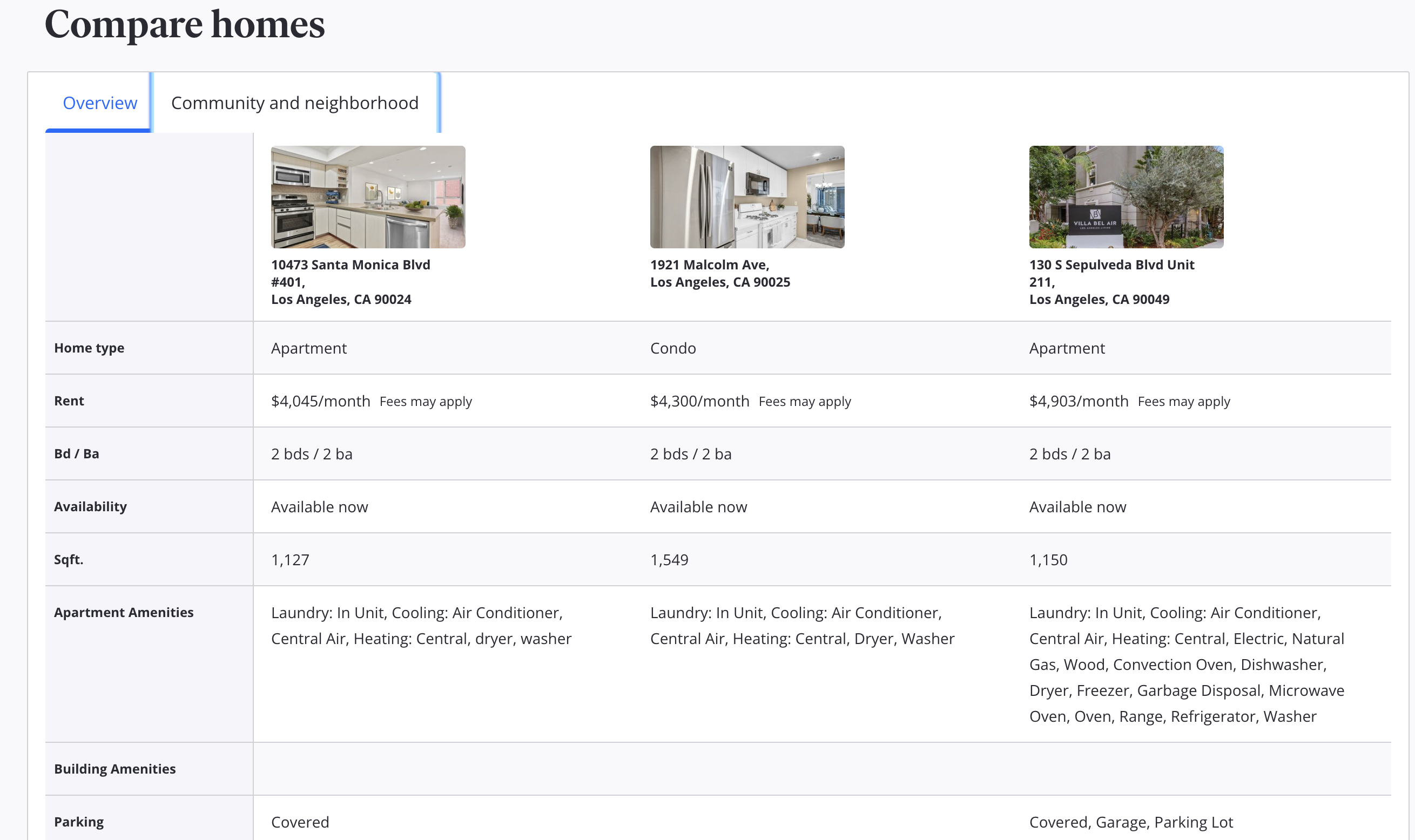
Surface the requirements Zillow does not currently make reliably visible.
The strategy does not introduce three unrelated ideas. Each change responds to an observed gap while preserving the parts Zillow already does well.
Requirement details are inconsistent. One listing may show a credit score or income multiple, while another says nothing about documents, deposits, or review timing.
A renter can spend time touring or pay to apply before discovering a requirement that makes the home impractical.
Require a shared set of property submitted fields and clearly label every item as Disclosed, Partial, or Not disclosed.When information is missing, renters must notice the gap, decide what to ask, and write the message themselves.
Critical questions are easy to miss. Renters may also reveal personal circumstances before knowing whether the policy is relevant.
Turn missing information into optional, editable policy questions while keeping personalization private until the renter chooses to send.Commute controls sit inside expanded Filters and rely on broad assumptions such as rush hour or off peak travel.
A generic estimate can hide whether a home works for the renter’s actual weekday schedule, and that context is lost across the journey.
Add a specific arrival or departure time inside Zillow’s existing filter flow and carry it into results and listing details.The redesign combines one core intervention with one supporting improvement, using Zillow’s existing listing, contact, and commute infrastructure.
Properties disclose structured screening and documentation requirements. Zillow distinguishes what is known, partial, and missing.
Private situation chips surface neutral questions. Renters can edit, close, or send. Nothing is shared automatically.
A specific weekday schedule carries from search filters to result cards and listing detail.
Make property submitted requirements easy to find, label missing information consistently, and give renters a safe way to ask follow up questions.
Determine who qualifies, promise approval, verify off platform demands, or infer a renter’s personal situation.
Switch views, review the application requirements, and see how optional personalization changes the question draft.
Information submitted by this property. Missing fields are labeled Not disclosed. Zillow does not predict approval.
Select any situations that apply. Your selections stay private.
The decision considers impact, evidence, effort, strategic fit, and operational dependency together.
Highest consequence and strongest differentiation. Effort is high because properties must supply and maintain the data.
Extends the requirements layer through existing Contact infrastructure. Message quality and renter privacy need validation.
Strong observed evidence and lower implementation effort. It improves an existing capability rather than solving the central unmet need.
Align field definitions with operations, legal, privacy, and fair housing teams.
Launch with selected Rental Manager partners in one market.
Scale only if renters gain clarity and properties sustain data quality.
The launch plan separates product usability from the harder operational question of whether properties will provide accurate information.
Track listing exposure, requirement review, question draft, message send, tour request, and application request events.
Purpose: establish the funnel and baseline behavior.Run usability sessions first. Then compare the pilot experience with a matched listing cohort or staged holdout.
Purpose: separate comprehension gains from selection bias.Review field completion, renter comprehension, property response burden, and reported late requirements every week.
Purpose: improve definitions before expanding supply.Read from left to right. Each method answers one question that must be resolved before expansion.
Can renters understand what is known, what is missing, and what to do next?
Can property teams complete the fields accurately without excessive setup work?
Do renters in the pilot encounter fewer late requirements than renters viewing similar listings?
Does the experience create misleading confidence, inappropriate screening, or added support burden?
The pilot needs to prove three things in order: properties can provide usable data, renters understand it, and late requirements decline without creating new harm.
This independent case study does not have Zillow’s baseline data. Numeric launch thresholds should be set with Product, Research, Operations, Legal, and Trust teams after baseline measurement and an onboarding dry run.
What we measureThe share of eligible pilot listings with every core requirement field completed.
How we judge successEstablish the baseline during onboarding. Expand only if completion remains consistently above the agreed operating threshold.
SourceListing setup dataWhat we measureThe share of renters who correctly identify what is known, what is missing, and their next step.
How we judge successCompare against the current experience. Look for a clear, repeatable improvement across usability rounds.
SourceUsability tasks and surveyWhat we measureThe share of application starters who discover a new document or financial requirement after contacting the property.
How we judge successCompare with similar non pilot listings. Expand only when the rate moves down consistently across multiple weeks.
SourceFollow up surveyWhat we monitorDiscrimination reports, misleading confidence, listing abandonment, message volume, and property support time.
How we judge successSet no regression limits from historical ranges. Any material safety or fairness signal pauses expansion.
SourceTrust, funnel, and support dataMetrics matter only when they change what the team does next.
All three primary measures improve beyond the agreed thresholds, and guardrails remain within their historical range.
Clarity improves, but listing completion or late surprises do not. Fix the weakest field or workflow, then run another pilot cycle.
The experience increases harmful screening, misleading confidence, listing abandonment, or support burden.
The project became stronger when the original centerpiece was invalidated by product discovery. Instead of defending the concept, I archived it and redirected the work toward a narrower problem with higher incremental value.